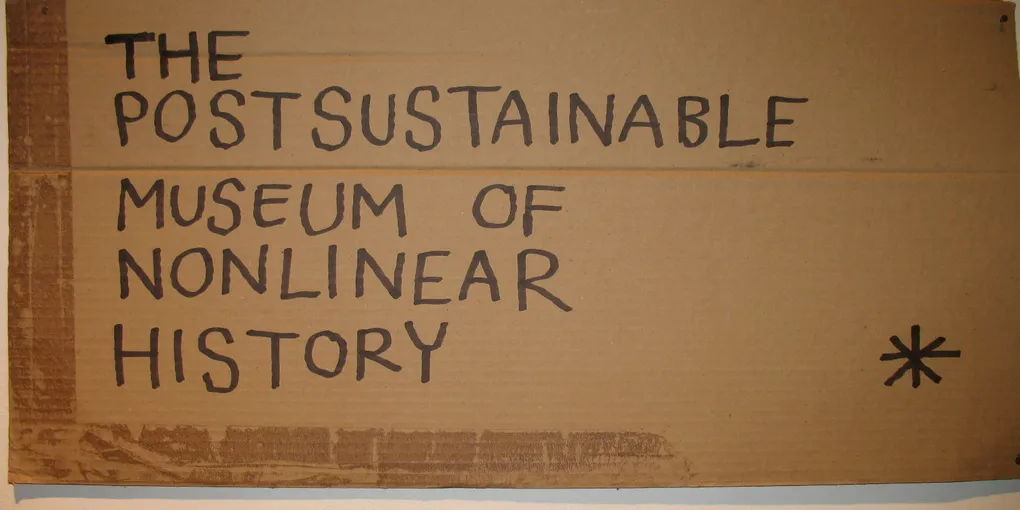
The Postsustainable Museum of Nonlinear History
This exhibition was produced from the “future” as a representation of modes of representation before we relinquished our belief in the artificial divide between nature and society and our conception of time as linear progression.
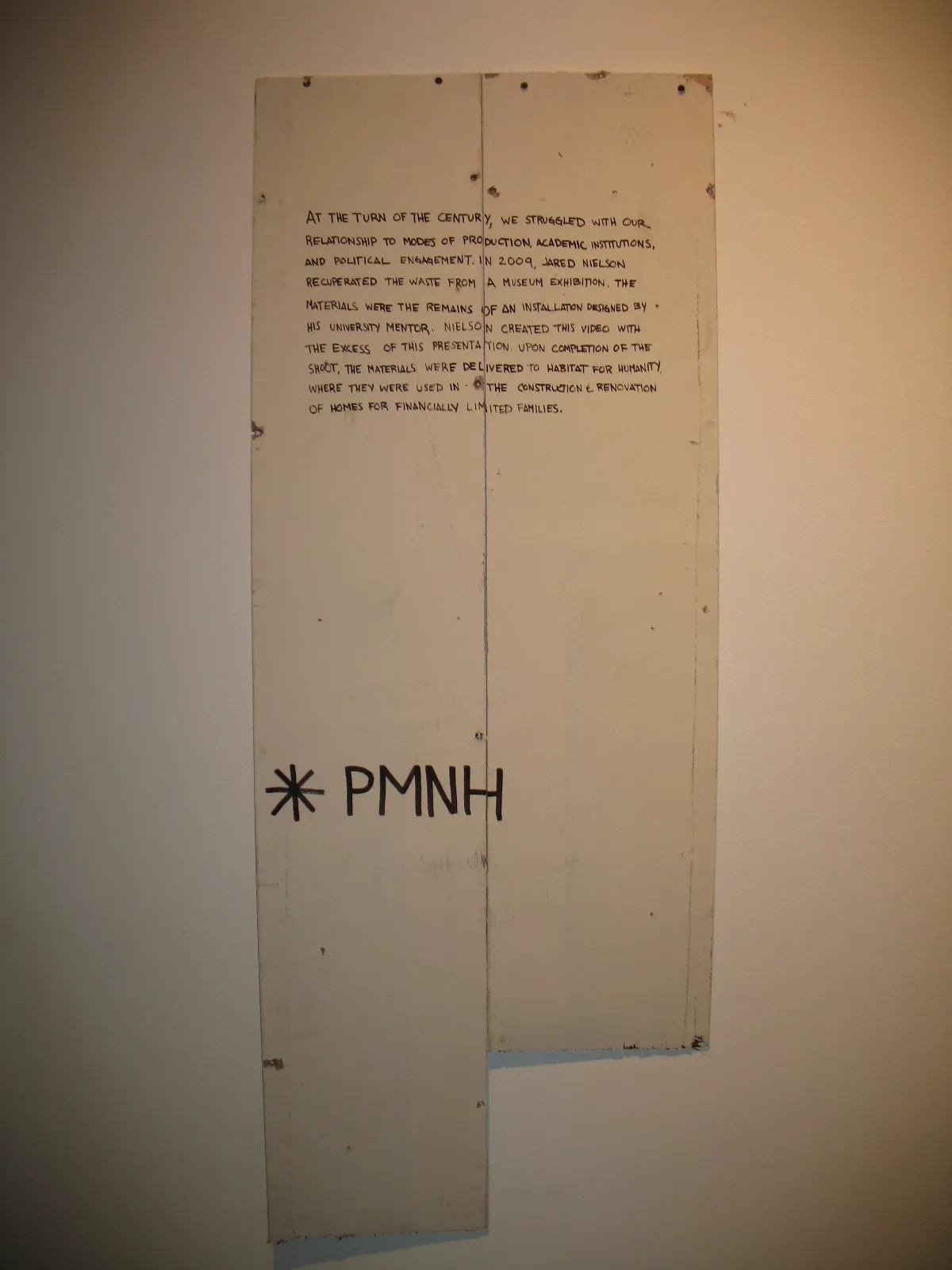
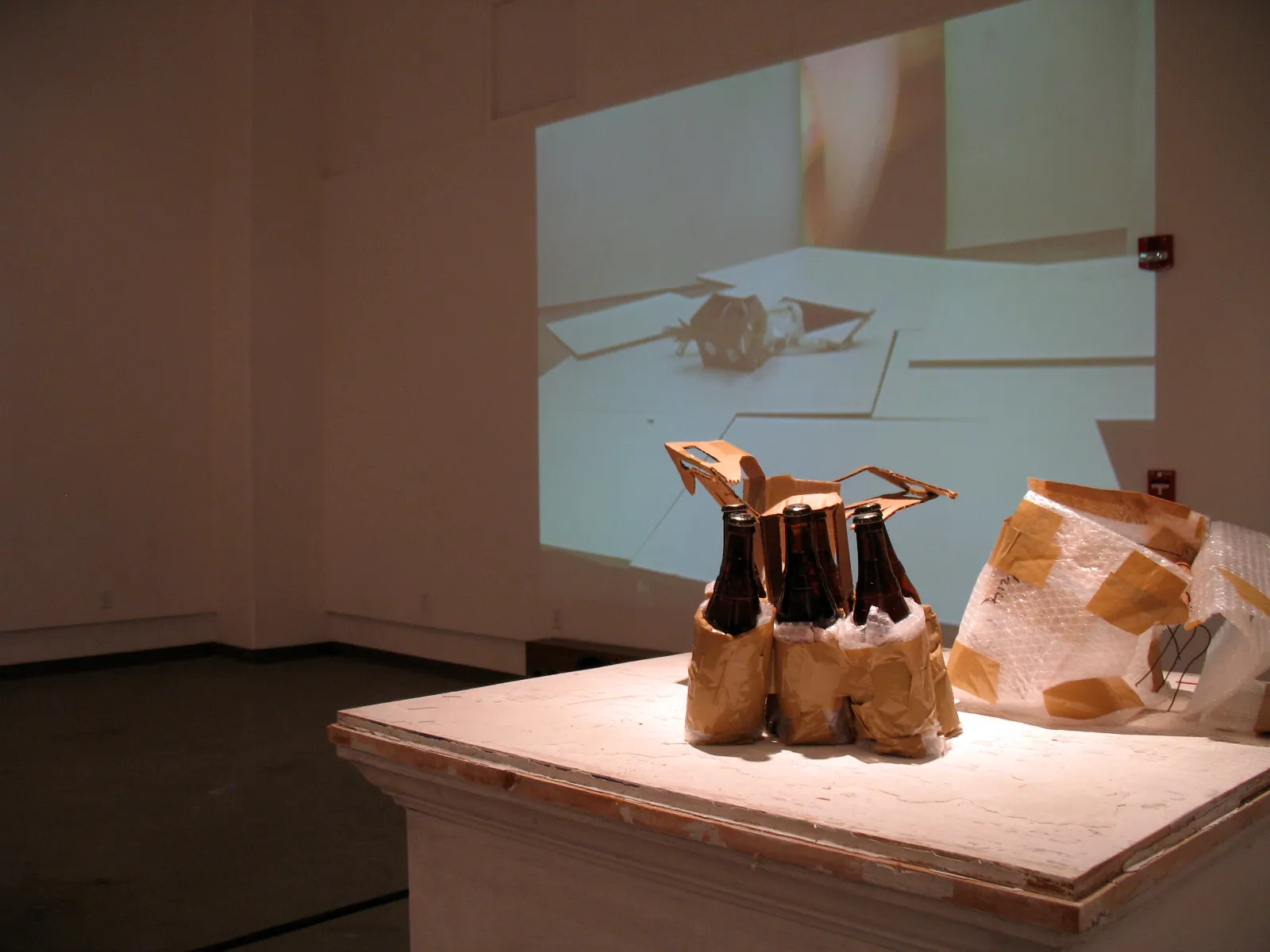
At the turn of the century, we struggled with our relationship to modes of production, academic institutions, and political engagement. In this project executed in 2009, Jared Nielsen recuperated the waste from a museum exhibition. The materials were the remains of an installation designed by his university mentor. Nielsen created this video with the excess of this presentation. Upon completion of the shoot, the materials were delivered to Habitat for Humanity, where they were used in the renovation of homes for financially limited families.
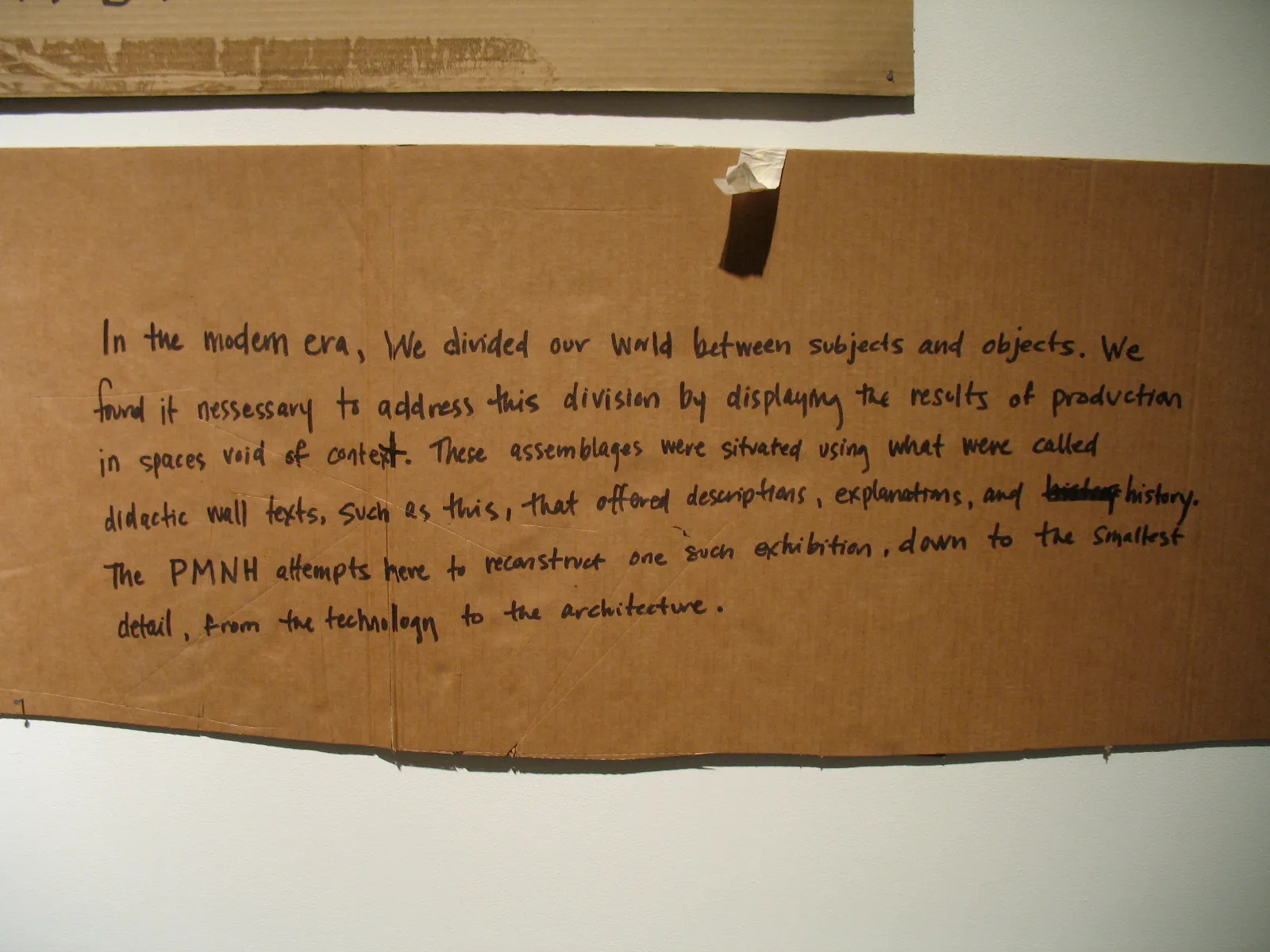
In the modern era, we divided our world between subjects and objects. We found it necessary to address this division by displaying the results of production in spaces void of context. These assemblages were situated using what were called didactic wall texts, such as this, that offered descriptions, explanations, and history. The PMNH attempts here to reconstruct one such exhibition, down to the smallest detail, from the technology to the architecture.
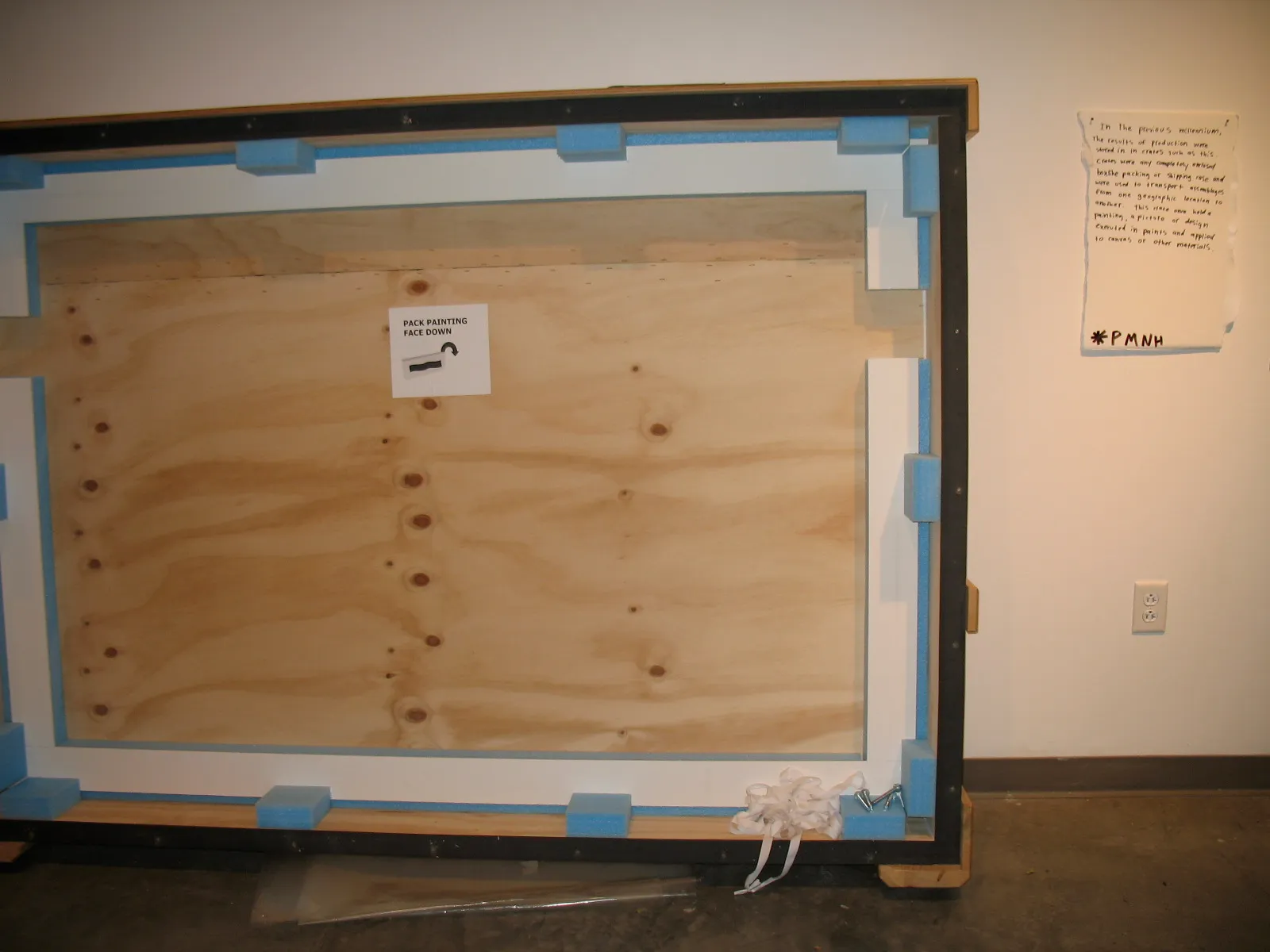
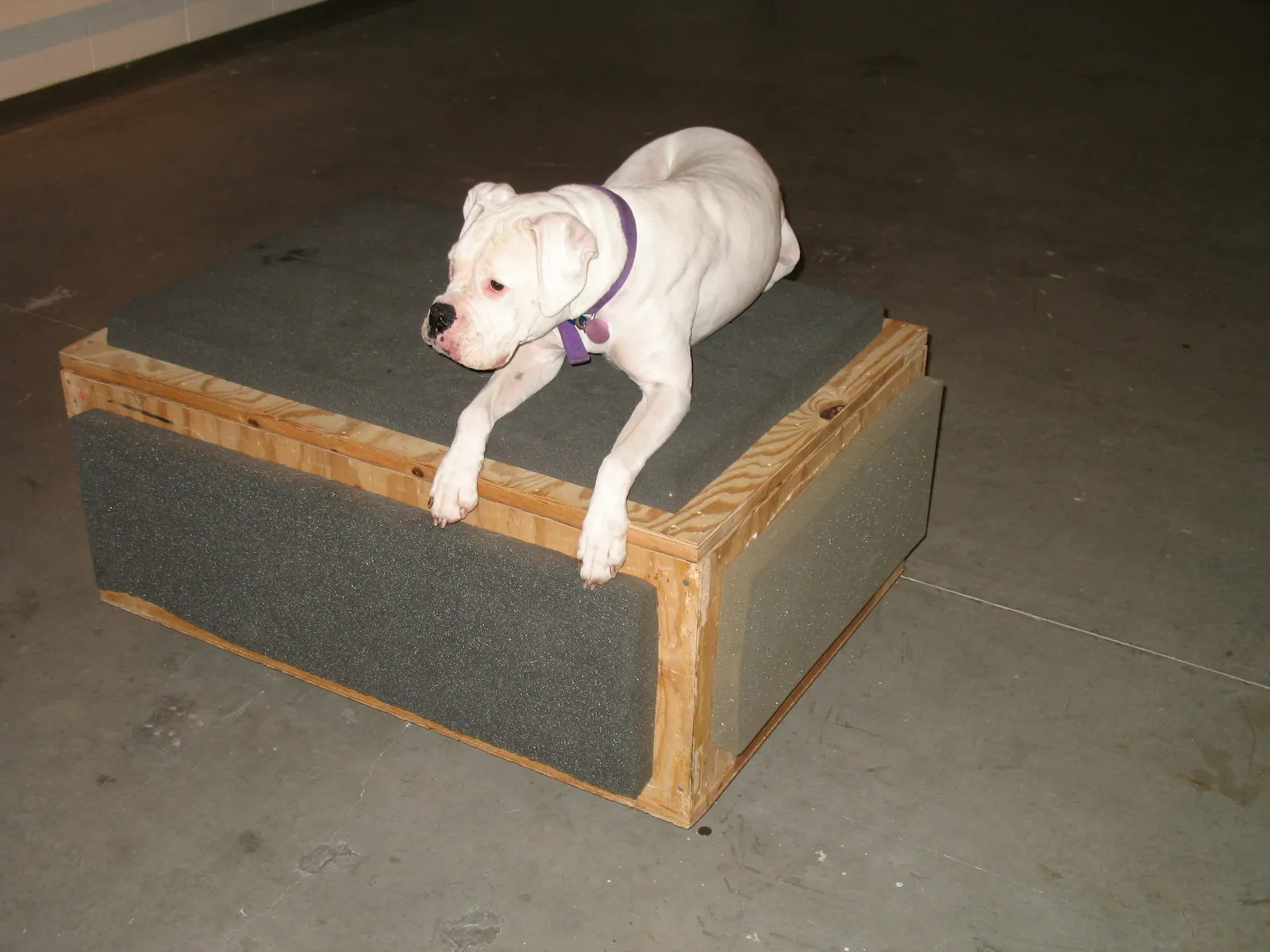
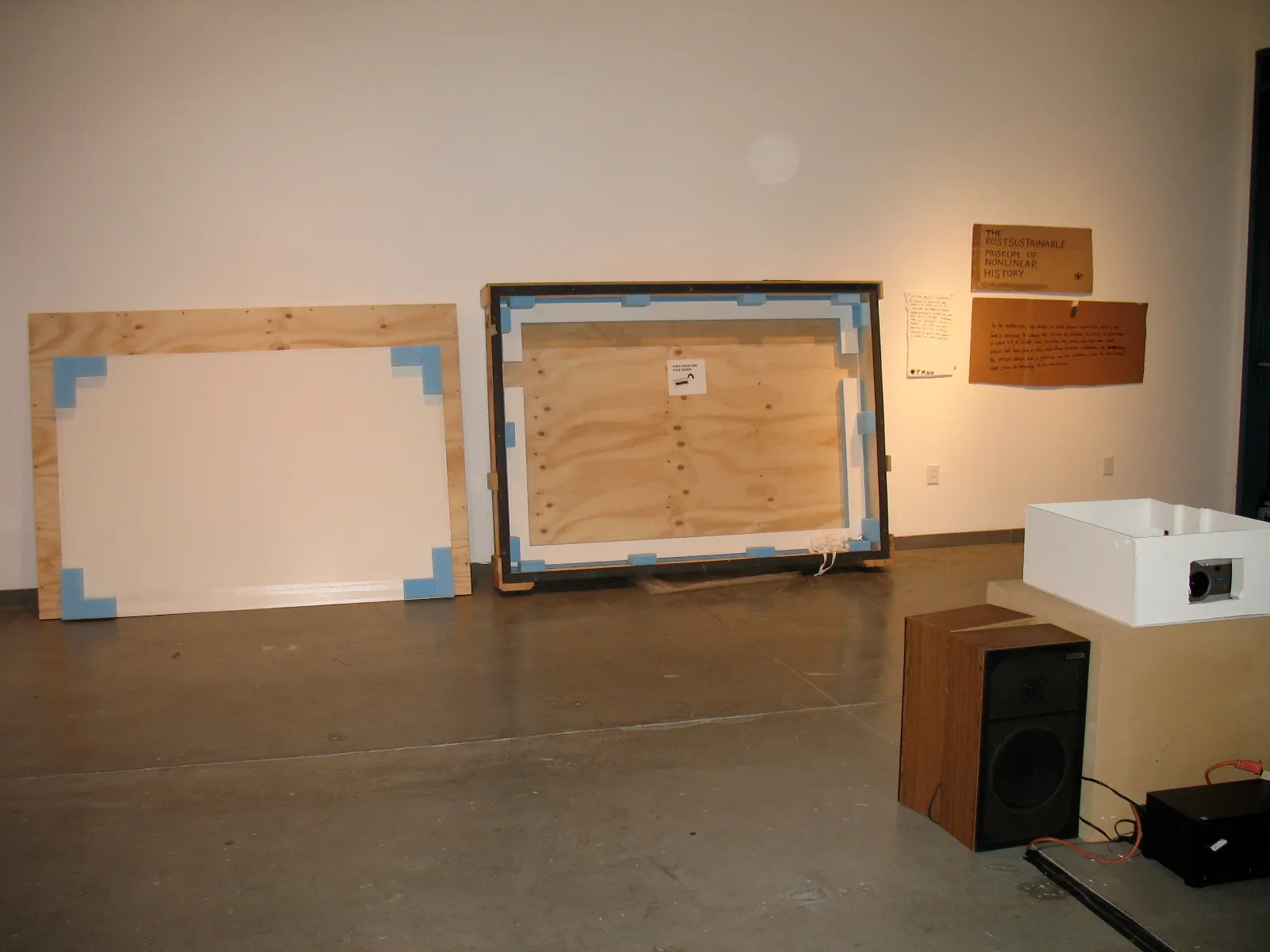
In the previous millennium, the results of production were stored in crates such as this. Crates were any completely enclosed boxlike packing or shipping case and were used to transport assemblages from one geographic location to another. This crate once held a painting, a picture or design executed in paints and applied to canvas or other materials.
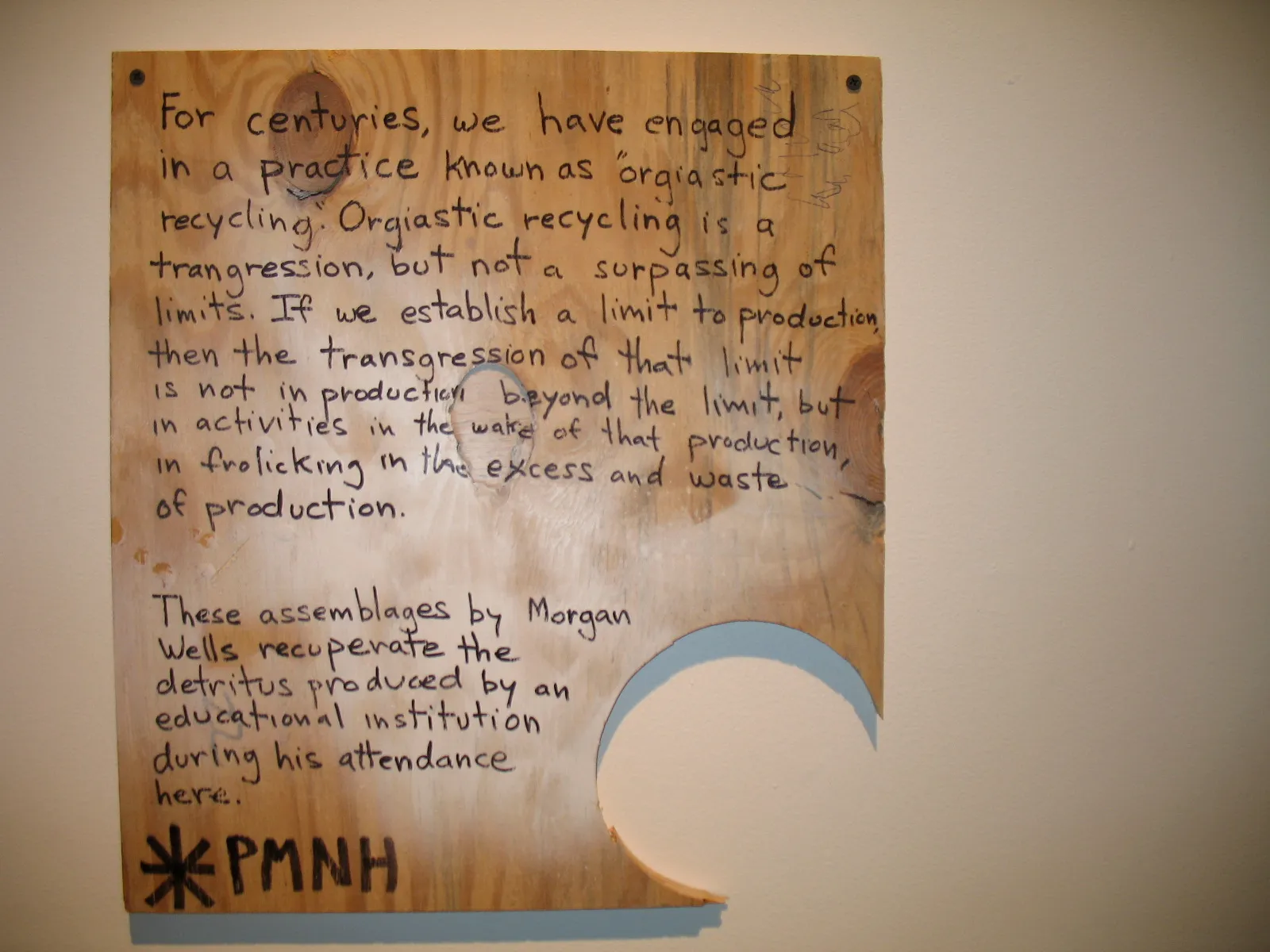
For centuries, we have engaged in a practice known as “orgiastic recycling”. Orgiastic recycling is a transgression, but not a surpassing of limits. If we establish a limit to production, then the transgression of that limit is not in production beyond the limit, but in activities in the wake of that production, in frolicking in the excess and waste of production. Through recycling, what may have been wasted is expended.
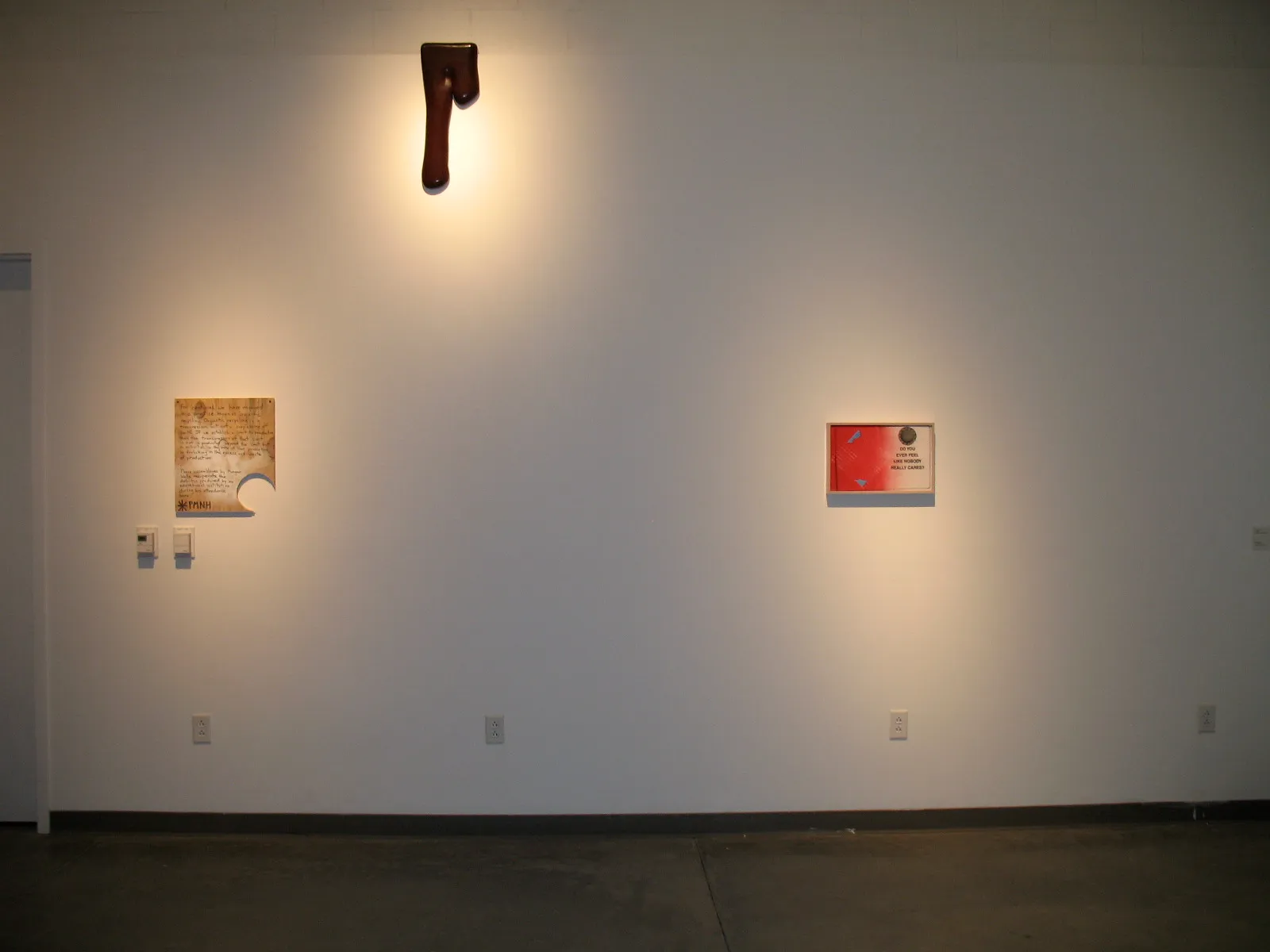
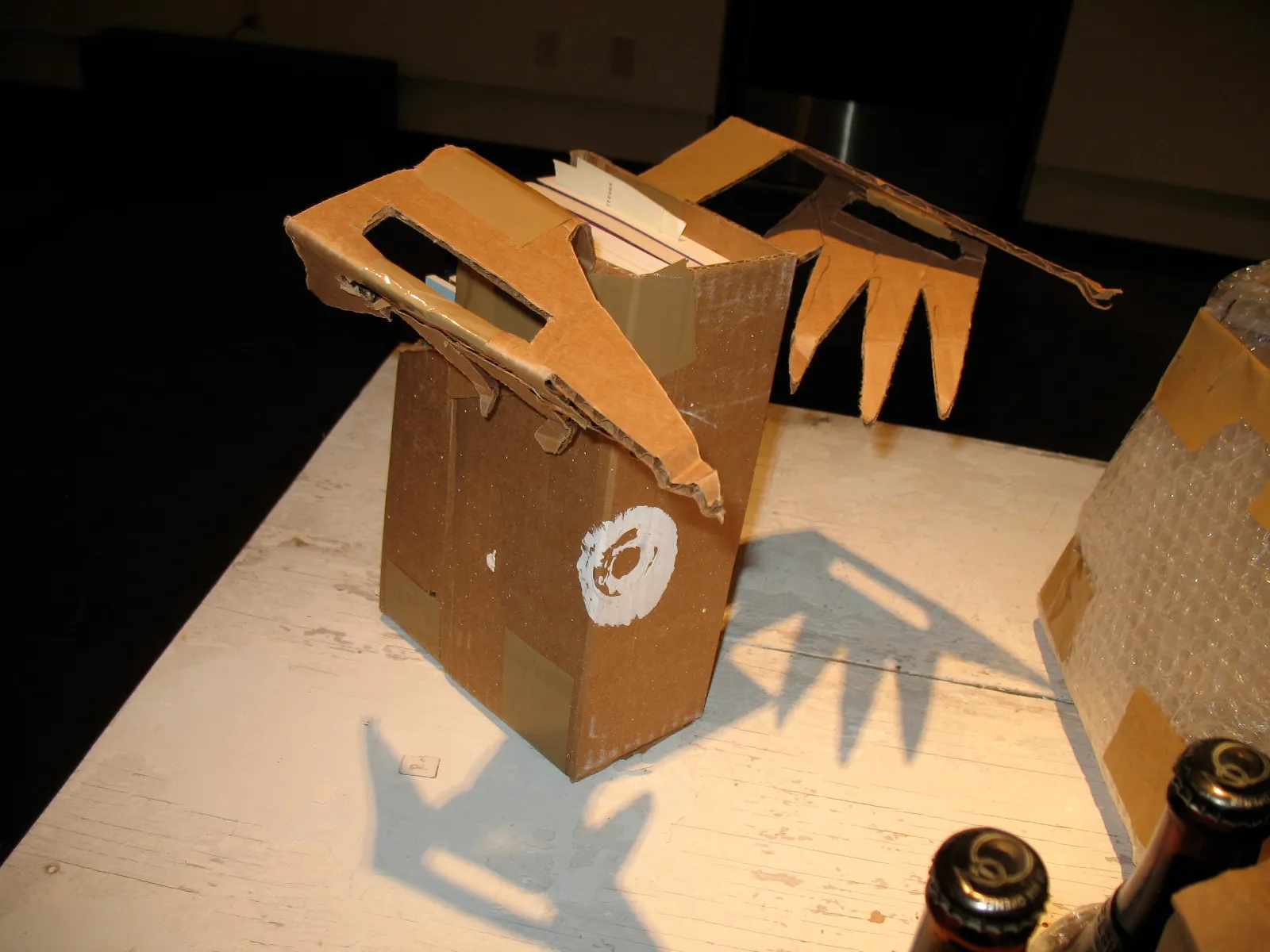
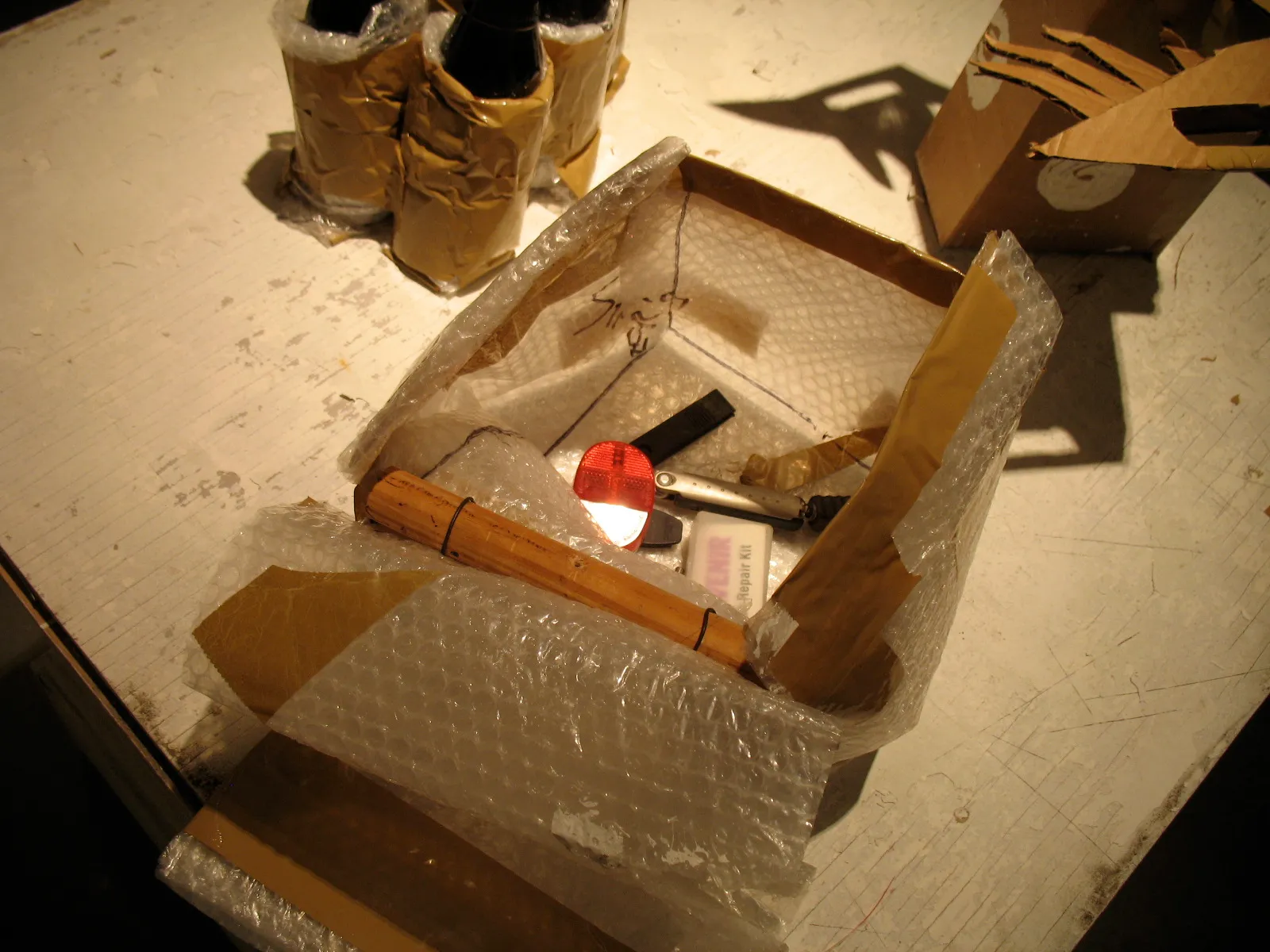
These assemblages by Morgan Wells recuperate the detritus produced by an educational institution during his attendance there.